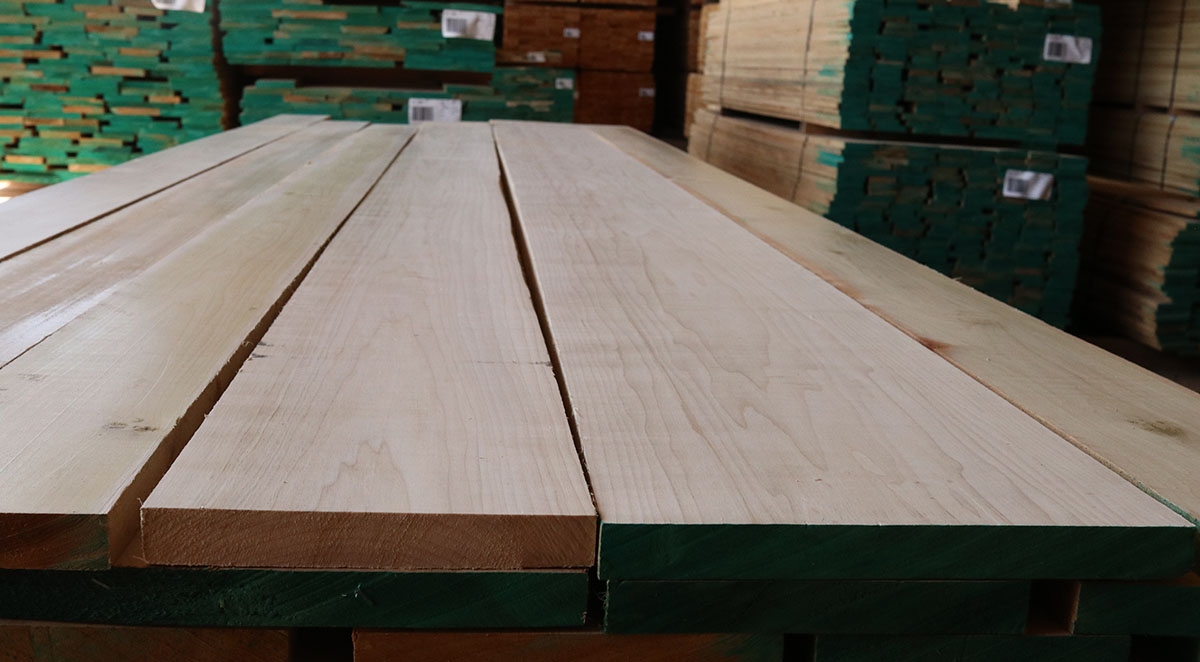
What Rough Sawn Lumber Really Means
Rough-sawn lumber is lumber that comes straight from the sawmill and is left without any additional finishing or processing. The sides of the board show the natural character of the wood and will almost always vary slightly in thickness from one piece to another. For some, this may come off as a flaw, but for those who love the natural look and don't mind a little extra work, rough-sawn lumber is the way to go.
However, rough-sawn lumber does not mean green, wet, or unstable wood. It will still need to be kiln-dried or air-dried before it is taken to market.
Planed Lumber
Planed lumber, on the other hand, has been processed through a planer mill after the boards are rough sawn. This process creates smooth, consistent surfaces and more uniform dimensions. Planer mills will remove rough, uneven material from the surface of the board, making them easier to handle, measure, cut, and incorporate into construction and manufacturing projects.
During the planing process, boards pass through a machine equipped with rotating cutterheads that shave small amounts of wood from the board's surface. This helps establish a consistent thickness and creates a smoother finish. Depending on the equipment and specifications, lumber may also be planed along its edges to achieve more uniform widths and dimensions. The result is a finished product that can be used immediately or moved into the next stage of production.
When is Planed Lumber The Appropriate Choice
Choose planed lumber when your project requires consistent dimensions and smooth surfaces that need to be painted or finished. Planed lumber can also be used when looking for lumber that is easier to handle, measure, glue, and assemble. Two boards of the same specified thickness will meet more cleanly when you join them together than rough-cut lumber.
Planed lumber is a great choice for the following projects:
- Interior trim
- Flooring
- Cabinet parts
- Doors
- Shelving
- Furniture components
- millwork
When you are planning to finish boards with paint, oil, or other coatings, planed lumber will show grain with more clarity. Additionally, coatings will adhere far more easily to smooth, planed lumber than with rough-sawn boards.
When Is It Appropriate to Use Rough Sawn Lumber
While rough-sawn lumber can be harder to work with, its aesthetic can set the tone for projects where texture, heft, and a more natural appearance are a part of the goal. Textured faces can take certain stains well and make for a less glossy, more rustic look. Rough-sawn lumber looks great on the exterior of a home.
One thing to consider with rough-sawn lumber is the additional time spent processing and sorting rough-cut lumber. Because the boards will be of various thicknesses and may not be as straight as smooth, planed lumber, it will take time to sort through similarly shaped lumber to find the perfect fit.
Rough-sawn lumber has a variety of use cases, and some of them include:
- Siding
- Fencing
- Garden structures
- Outdoor benches
- Timber Framing
- Rustic casework
- Farm Buildings
How to Choose the Right Lumber for Your Project
Both rough-sawn and planed lumber are versatile wood products and can be used across a variety of different projects depending on the needs of the builder or manufacturer. Choosing between the two types can be tough, but when you consider the following factors, you can come up with a definitive decision:
1. Project Requirements
Start by identifying the specific needs of your project. Rough-sawn lumber is often a good choice for applications that require additional customization, while planed lumber is better suited for projects that require smooth surfaces and consistent dimensions.
2. Desired Aesthetic
Consider how the finished wood will look in your project. Rough-sawn lumber offers a natural, textured appearance that works well for rustic furniture, exposed beams, and decorative features. Planed lumber provides a smoother finish that is often preferred for cabinetry, furniture, and interior trim.
3. Dimensional Accuracy
If your project requires consistent thicknesses and accurate measurements, planed lumber can help simplify the construction or manufacturing process. Rough-sawn lumber may require additional milling to achieve the desired dimensions.
4. Processing Requirements
Think about how much additional work will be needed before the lumber is ready for use. Rough-sawn lumber may require planing, sanding, or other preparation, while planed lumber can reduce the amount of processing needed before installation or manufacturing.
5. Budget and Material Costs
Compare the initial cost of the lumber with the labor, equipment, and time required to prepare it for your project. Rough-sawn lumber may have a lower purchase price, but additional processing can increase the overall cost. Planed lumber may cost more initially while helping reduce preparation time and labor.
6. Wood Species and Availability
Different wood species offer varying levels of strength, durability, workability, and appearance. Consider which species best suits your application and whether it is available in the dimensions and finish you need.
Ultimately, choosing the proper wood product is up to the specs of your project and how much time you want to spend preparing lumber to fit together. By thinking through the intended application, aesthetics, and budget, you can select the lumber that provides the proper balance of these things. Working with an experienced lumber supplier can make a world of difference when identifying the most practical option for your use case.
Church and Church Planer Mill
Church & Church Planer Mill provides custom-milled lumber solutions for construction, manufacturing, and woodworking projects throughout Northwest North Carolina and beyond. Whether your operation requires rough-sawn lumber or professionally planed material, our team can help you find the right product for your specifications. Contact Church & Church Planer Mill today to discuss your lumber needs and learn more about our milling capabilities.