What You Should Know About Planer Mills
1. Planer Mills Create Consistent Lumber Dimensions
Planer mills are often associated with creating smooth lumber that is ready to apply finishes to. While this is true and one of the primary purposes of a planer mill, this planing also removes material to create a more consistent thickness.
The milling process for lumber begins with freshly harvested trees straight from the logging truck. This wood is separated by species and grade and then debarked and cut down into rough-cut boards at the sawmill. Rough-cut wood is always dimensionally all over the place, and not smooth at all. It is also not ready for use in most applications where lumber is needed to be used.
Planer mills use a variety of blades of different sizes and thicknesses to shave boards down to a smooth, dimensionally accurate board that can be taken off the line and used for just about any project. Planers are set up so that you can run multiple boards through at a time, and they will all be very consistent with one another. This is important for manufacturers and woodworkers who need consistency across their raw materials.
This consistency in lumber size can reduce the amount of additional processing required by the customer. Customers can spend more time working on the product rather than cutting and sanding unfinished lumber. This is especially true when working on furniture, millwork, and flooring.
2. Planing Can Reveal the Character of the Wood
Each species of tree has its own unique natural characteristics that can be brought out by proper planing. When wood is rough cut, much of it looks the same aside from color. However, when all of the rough, excess material is removed, it can reveal the grain, color, and natural character of each specific species. This is especially true with hardwoods such as cherry, maple, or walnut.
3. Planer Mills Can Process Large Amounts of Lumber Efficiently
Industrial planer mills use very efficient feed systems and cutterheads that allow them to process lumber efficiently. This can save time for both the lumber mill as well as the customer,
Customers who take the time to process rough-sawn lumber themselves will run into the extremely arduous process of cutting and sanding singular boards by hand. This can take a massive amount of time, while processing boards with an industrial planer mill can run large quantities through at the same time.
4. A Planer Mill Reduces Waste in Manufacturing
Sawmills that finish lumber with a planer mill can help manufacturers get more usable material out of every run of lumber. Rough-sawn boards require additional processing before they are ready for use. When lumber is planed to consistent dimensions before it makes it to the customer, a part of the job is already done. This reduces the amount of material that needs to be removed during manufacturing and helps businesses make better use of the lumber they produce.
More consistent lumber dimensions can also improve material planning. When manufacturers know what to expect from the lumber they receive, it becomes easier to determine how much material is needed for a project and how boards will be used throughout production. This consistency can help reduce unnecessary machining, improve yield, and make production schedules more predictable. For cabinet manufacturers, furniture makers, millwork shops, and other woodworking operations, these small efficiencies can add up across larger orders and ongoing production.
5. Planed Lumber is Easier to Store and Organize
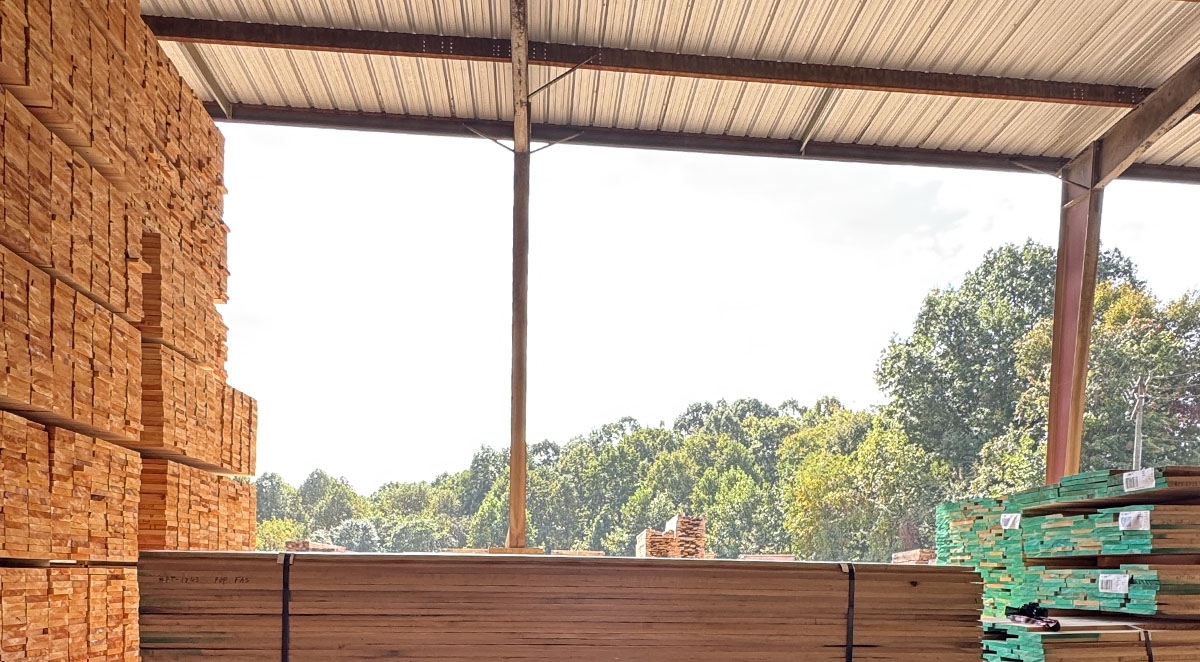
Consistent thickness and width make storing and organizing boards much easier than trying to deal with rough-sawn lumber with sizing that is all over the place. Uniform stacks are easier to organize in a warehouse, making it much easier to count, bundle, identify, and track.
6. Consistent Lumber Can Improve Shipping and Logistics
Consistent lumber dimensions make shipping and load planning easier. Uniform boards can be bundled and stacked more predictably, helping suppliers estimate how much material will fit on a truck or trailer. This makes it easier to prepare large orders and coordinate shipments.
When bundles are consistent, manufacturers can also make better use of available transportation space. Uniform stacks are easier to arrange and secure, helping streamline loading and unloading. For both lumber suppliers and customers receiving large quantities of material, this can make the shipping process more efficient and manageable.
Planer Mills - More Than Just Smooth Finishes
Planer mills do much more than just make smooth surfaces. They produce lumber with consistent dimensions and can help manufacturers reduce additional processing, improve material efficiency, simplify storage, and make shipping and logistics far easier.
These benefits can make a huge difference throughout the entire lumber supply chain from mill to manufacturer.
At Church and Church Lumber Company, our planer mill helps us provide hardwood lumber that is consistent, dependable, and ready for the needs of our customers. Whether you are a cabinet manufacturer, furniture maker, millwork operation, distributor, or other woodworking business, properly planed lumber can help simplify your production and material handling processes.
Looking for consistently milled hardwood lumber for your next order? Contact Church and Church Lumber Company to learn more about our planer mill services and how we can help meet your lumber needs.